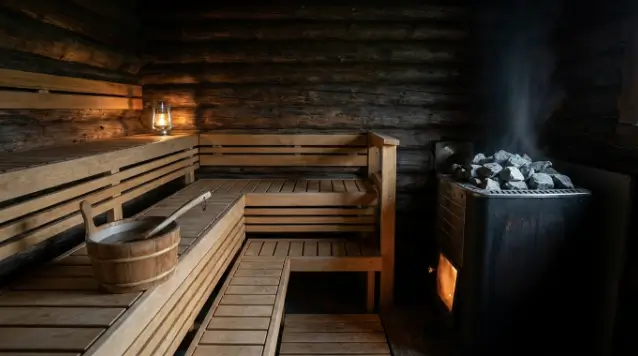
A traditional sauna kept up on a modest schedule, roughly $150 to $300 a year in wear parts and exterior treatment plus a periodic electrical check, commonly lasts 15 to 25 years. The habits that get it there are mechanical and structural, not just cosmetic: heater stones need periodic replacement, exterior wood needs reoiling, hardware needs occasional attention, and the electrical connections powering a high-draw heater need an eye kept on them. Here are the seven habits that matter most, in the order they tend to come due.
1. Replace Heater Stones Every One to Two Years
Sauna rocks crack from the repeated cycle of intense heat followed by a splash of water for steam, and a cracked stone holds less heat and can shed grit down onto the heater element. For a cabin used several times a week, plan to sort through and replace a portion of the stone bed once a year, discarding any stone that shows a visible crack or has crumbled at the edges. Lighter use can stretch this to every two years. New stones cost relatively little, usually $20 to $50 for a bag sized to a standard residential heater, which makes this one of the cheapest habits on the list relative to the damage a badly failing stone bed can eventually cause the element underneath it.
2. Reoil the Exterior Every One to Two Years
Exterior cladding takes weather that the interior never sees, and an exterior-rated wood oil reapplied every year or two keeps rain and UV from graying and cracking the siding prematurely. This is different from interior wood care, since the outside of the cabin is not subject to the same heat cycling and can safely take a standard deck or exterior wood finish. A gallon of quality exterior oil runs $40 to $70 and typically covers a two to four person cabin’s exterior with a coat or two, making this an inexpensive habit that protects against far more expensive siding replacement down the line.
3. Check Door Hardware and Weatherstripping Twice a Year
Hinges, the door handle, and any magnetic or friction latch see heavy daily cycling and eventually loosen or wear. A door that no longer closes flush lets warm air escape during a session and, worse, lets moisture and pests in when the cabin sits idle. Twice a year, tighten hinge screws, check that the door still seats evenly against its frame, and replace any weatherstripping that has compressed flat or started to crumble. This is a fifteen-minute check with parts that rarely cost more than $20, and it is easy to skip precisely because nothing about a loose hinge feels urgent until the door stops closing correctly.
4. Watch for Wood Movement as the Seasons Change
Solid wood expands and contracts with humidity, and a cabin that goes through a full seasonal cycle, especially one moved between a humid summer and a dry winter, will show small gaps opening and closing in the panel joints. Most of this is normal and self-corrects, but a gap that keeps growing instead of closing back up in the following season can mean a panel has warped or a fastener has backed out. Catching this early, usually with a quick visual walk-around each fall, means a single board can be adjusted or replaced instead of a whole wall section needing rebuilding after water finds its way into a gap that was ignored for a few years.
5. Keep the Ventilation Path Clear
The intake and exhaust vents that manage airflow through the cabin do real structural work over the years, not just comfort during a session, since trapped humidity is what eventually rots framing lumber and blackens wood with mold. Check both vent openings every few months for dust, spider webs, or debris blocking airflow, and confirm the exhaust vent still draws properly by holding a hand near it while the heater runs. A blocked vent is one of the more common reasons a cabin that looked fine for years suddenly develops a stubborn mold problem in a corner that never got proper airflow.
See also: Accepting Crypto Payments in Your Business
6. Have the Heater and Circuit Inspected Every Few Years
A licensed electrician checking the heater’s wiring, connections, and breaker every three to five years is one of the few maintenance items worth paying a professional for rather than doing yourself. Loose connections at a 240-volt circuit are a genuine fire risk, and they tend to develop slowly enough that nothing seems wrong until a real problem shows up. This is also a good time to confirm the heater’s stones, element, and thermostat are all functioning within the manufacturer’s spec, and to source replacement stones or an element from a seller who lists the exact model, since a page to browse SweatDecks traditional saunas and their listed heater specs makes it easier to match a replacement part to the original unit than guessing from a generic listing.
7. Budget a Small Annual Fund for Wear Parts
Setting aside $150 to $300 a year for stones, oil, weatherstripping, and the occasional professional check keeps small problems from becoming expensive ones. A cabin that gets this modest ongoing attention routinely outlasts one bought for the same price but left completely alone until something visibly fails, at which point the fix is almost always more expensive than the years of small maintenance would have been.
Why These Habits Pay Off Beyond the Wood Itself
A cabin that stays in good working order is a cabin that keeps getting used, and usage frequency is where the sauna research consistently points. Large Finnish cohort studies have linked using a sauna four to seven times a week with lower rates of fatal cardiovascular events and all-cause mortality compared with once-weekly use, an association that held after adjusting for other risk factors. A 2018 review in Mayo Clinic Proceedings summarized similar associations across multiple studies. These findings describe population-level patterns, not a guarantee for any household, but a heater that still works reliably in year twelve, rather than one abandoned in year four because of a preventable failure, is the version of ownership that has any chance of matching what the research describes.
Frequently Asked Questions
How often do sauna heater stones need to be replaced? Roughly once a year for heavy use, every two years for lighter use. Cracked stones hold less heat and can shed grit onto the element.
How long does a well-maintained traditional sauna typically last? A quality cabin with consistent upkeep commonly lasts 15 to 25 years or more. Heaters and electrical components usually need attention before the wood structure does.
What’s the single most budget-effective maintenance habit? Keeping airflow going after every session. An hour with the door and vents open costs nothing and prevents most expensive long-term moisture problems.
Should the heater’s electrical connections be checked regularly? Yes, a visual check every few years by a licensed electrician is worth the cost, since loose connections at a 240-volt circuit are a real fire risk.
References
- Association between sauna bathing and fatal cardiovascular and all-cause mortality events, JAMA Internal Medicine, 2015
- Cardiovascular and Other Health Benefits of Sauna Bathing: A Review of the Evidence, Mayo Clinic Proceedings, 2018
- Joint associations of sauna bathing and cardiorespiratory fitness on cardiovascular and all-cause mortality risk, Annals of Medicine, 2018
By Aaron Peale
